
Doxycycline 100 mg: Complete Guide, Uses, Dosage, Side Effects & Safety Information
-
noah1902389@gmail.com
- Posted on
- 0 comments
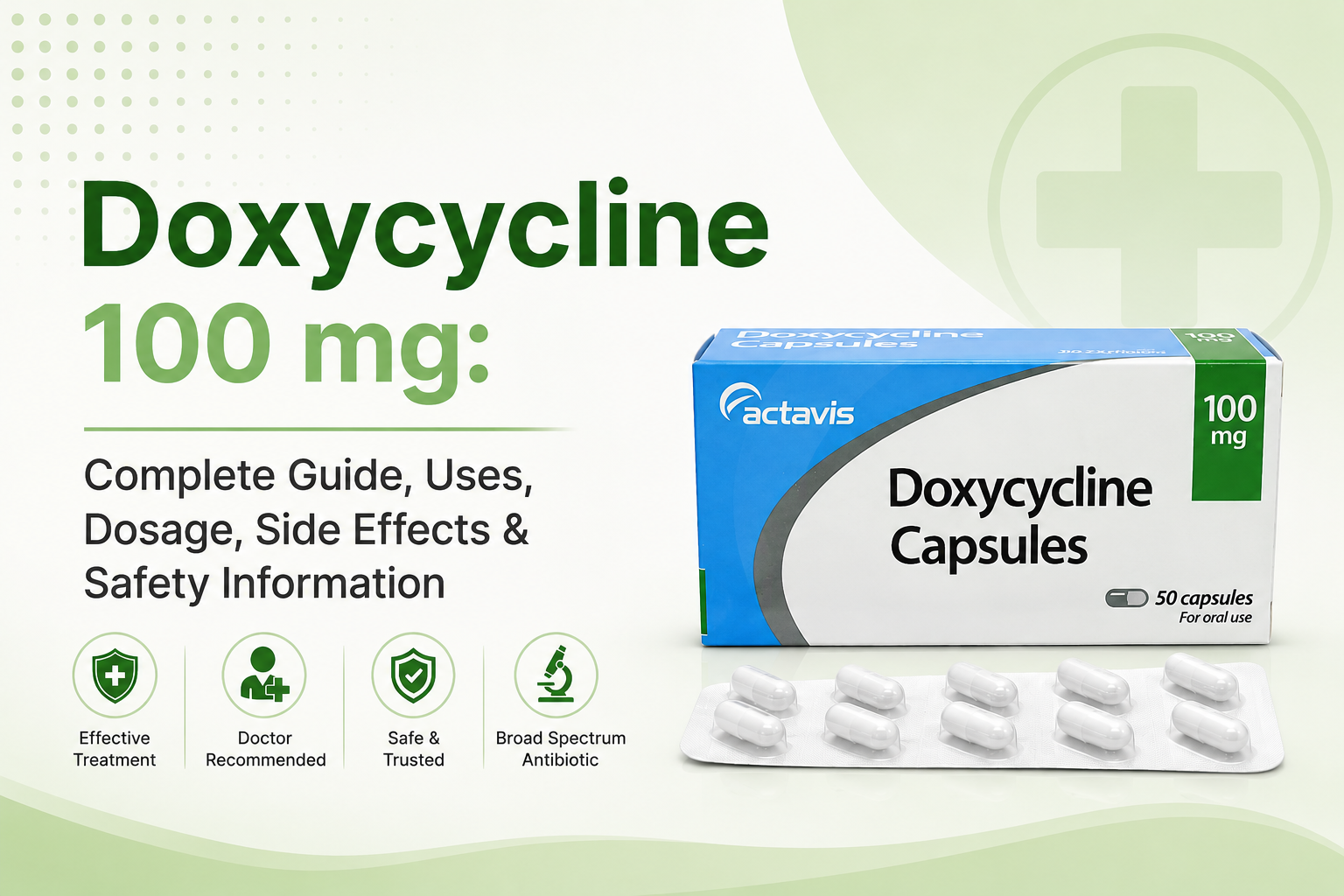
Doxycycline 100 mg is a commonly prescribed antibiotic medication used to treat a wide range of bacterial infections. It belongs to a group of medicines called tetracycline antibiotics, which work by stopping the growth and spread of bacteria in the body. Healthcare professionals may prescribe doxycycline for infections affecting the respiratory system, skin, urinary tract, and other areas.
This complete guide explains Doxycycline 100 mg uses, dosage information, possible side effects, precautions, and safety considerations to help you understand this medication better.
What Is Doxycycline 100 mg?
Doxycycline 100 mg is an antibiotic that contains doxycycline as its active ingredient. It works by preventing bacteria from producing essential proteins needed for their survival. By blocking bacterial growth, doxycycline helps the immune system fight infections more effectively.
Doxycycline is available in different forms, including tablets and capsules. The 100 mg strength is one of the most commonly prescribed doses for adults and is used for many bacterial conditions.
Uses of Doxycycline 100 mg
Doxycycline 100 mg may be prescribed for several bacterial infections, including:
1. Respiratory Infections
Doxycycline may help treat certain respiratory infections caused by bacteria, such as bronchitis and pneumonia. It is often selected when specific bacteria are known or suspected to respond to tetracycline antibiotics.
2. Skin Infections and Acne
Doxycycline is frequently used in dermatology for managing moderate to severe acne. It helps reduce acne-causing bacteria and inflammation, improving skin appearance over time.
3. Sexually Transmitted Infections (STIs)
Doctors may prescribe doxycycline for certain bacterial infections, including some sexually transmitted infections, depending on diagnosis and medical guidelines.
4. Tick-Borne and Other Infections
Doxycycline may be used to treat infections transmitted by ticks, including certain forms of Lyme disease and other bacterial illnesses.
5. Other Bacterial Conditions
Healthcare providers may recommend doxycycline tablet for additional infections involving the eyes, urinary system, or digestive system when appropriate.
Doxycycline 100 mg Dosage Information
The correct doxycycline dosage depends on the type of infection, the patient’s age, medical history, and the doctor’s instructions.
A common adult dose may involve taking 100 mg once or twice daily, but the exact schedule should always be determined by a healthcare professional.
Important dosage tips:
- Take doxycycline exactly as prescribed.
- Complete the full course of treatment even if symptoms improve.
- Do not take extra doses to make up for a missed dose.
- Swallow tablets with a full glass of water.
- Avoid lying down immediately after taking doxycycline to reduce throat irritation.
Common Side Effects of Doxycycline
Like all medicines, doxycycline may cause side effects. Common side effects include:
- Nausea or vomiting
- Stomach discomfort
- Diarrhea
- Loss of appetite
- Headache
- Increased sensitivity to sunlight
- Skin rash
Taking doxycycline with proper guidance and following instructions can help reduce the risk of unwanted effects.
Serious Side Effects and Safety Warnings
Although uncommon, some people may experience serious reactions. Seek medical advice if you notice:
- Severe allergic reactions
- Difficulty breathing
- Persistent severe headache
- Vision changes
- Severe skin reactions
- Long-lasting or severe diarrhea
Doxycycline can make your skin more sensitive to sunlight, so using sunscreen and limiting prolonged sun exposure is recommended.
Important Precautions Before Taking Doxycycline
Before using doxycycline 100 mg, inform your healthcare provider if you:
- Have allergies to tetracycline antibiotics
- Are pregnant or breastfeeding
- Have liver problems
- Take other medications or supplements
Avoid taking doxycycline at the same time as products containing calcium, iron, magnesium, or zinc unless advised by a healthcare professional, as these may affect absorption.
What Is Doxycycline Most Used For?
Doxycycline is a widely used antibiotic that belongs to the tetracycline family of medicines. It is commonly prescribed by healthcare professionals to treat different types of bacterial infections and inflammatory skin conditions. One of the most popular strengths available is Doxycycline 100 mg, which is frequently used because of its effectiveness against a broad range of bacteria.
How Does Doxycycline Work?
Doxycycline works by preventing bacteria from producing proteins needed for their growth and survival. By stopping bacterial multiplication, the immune system can more effectively remove the infection.
Important Information About Doxycycline 100 mg
Always take Doxycycline 100 mg exactly as prescribed by a healthcare professional. It is usually recommended to take it with plenty of water and avoid lying down immediately after taking the tablet to reduce throat irritation.
Common side effects may include nausea, stomach discomfort, diarrhea, and increased sensitivity to sunlight. Avoid unnecessary sun exposure and use protection while taking this medication.
Doxycycline Side Effects
Doxycycline side effects may include nausea, vomiting, stomach upset, diarrhea, headache, skin sensitivity to sunlight, and dizziness. Seek medical advice if severe reactions or unusual symptoms occur.
Doxycycline and Lactic Acid Bacillus Capsules
Doxycycline and Lactic Acid Bacillus capsules are often used together to support antibiotic treatment and digestive health. Doxycycline helps fight bacterial infections, while Lactic Acid Bacillus helps maintain healthy gut bacteria. Always use these medicines as directed by a healthcare professional.
Doxycycline Side Effects After Stopping
After stopping doxycycline, some people may experience temporary symptoms such as stomach discomfort, changes in bowel habits, or skin sensitivity. Most side effects improve gradually. Consult a healthcare professional if symptoms persist or worsen.
Doxycycline 100 mg Dosage
| Doxycycline 100 mg Dosage Information | Details |
|---|---|
| Common Dose | 100 mg once or twice daily, as prescribed |
| Uses | Bacterial infections, acne, and other conditions |
| Duration | Depends on infection type and doctor’s advice |
| How to Take | Swallow with water and follow medical instructions |
| Safety Tip | Complete the full prescribed course |
| Medical Advice | Consult a healthcare professional before changing dosage |
Doxycycline 100mg Twice a Day?
Doxycycline 100mg twice a day means taking one 100 mg dose in the morning and one in the evening, only if prescribed by a healthcare professional. The dosage schedule depends on the infection type and individual medical needs. Follow medical advice carefully.
What Should You Avoid When Taking Doxycycline?
Avoid taking doxycycline with dairy products, calcium, iron supplements, and antacids close to the dose, as they may reduce absorption. Limit excessive sun exposure, avoid lying down immediately after taking it, and follow your doctor’s instructions for safe use.
What Is the Most Common Side Effect of Doxycycline?
The most common side effects of doxycycline include nausea, vomiting, stomach upset, and diarrhea. Some people may also experience increased sensitivity to sunlight. Taking doxycycline as directed can help reduce discomfort and improve treatment safety.
Website: https://buyivermectineasy.us/
Categories:-
- buy Ivermectin 3mg | buy Ivermectin 6mg | Ivermectin 12mg Online
- Ivermectin 24 Mg (Covilife-24) | Ivermectin 40Mg (Covilife-40) | Ivermectin 80 Mg (Covilife-80)